The following op-eds represent those that students in Human Rights History and Theory from Fall 2023 chose to revise from the term into 750-word and 1200-word pieces. The pieces are from students who consented to share their work after the term.
The op-eds drew on the themes we covered in the class and elaborated on an ongoing historical problem or how some of the ideas we analyzed can better help us understand a present-day issue. I have divided the op-eds into five general categories: International Governance, US Foreign Policy, Human Rights in the US and the World, Human Rights and Migration, and Human Rights for Whom.
International Governance
In the first group of op-eds, we have pieces that analyze different aspects of international governance.
- Hannah Ho explores the balance between nation-state sovereignty and global order as we respond to climate change.
- Myles Xavier evaluates the international community’s attempts to reconcile with the Rwandan Genocide through the International Criminal Tribunal for Rwanda.
- Abby Kodidek makes a case for reforming the way UN Peacekeeping functions, where she focuses in particular on the case of the Democratic Republic of the Congo.
- Mella Bettag analyzes the recent announcement that Kenya will send their forces to Haiti, which the UN Security Council has approved.
- Finally, two pieces offer critiques of the international system, particularly on the decision to suspend Russia from the United Nations Human Rights Council after the start of the war in Ukraine. Emma Van Steertegem writes about why certain countries may have voted down suspending Russia from the Human Rights Council, and why understanding their motivations is essential for the international community. Ellie Bullie analyzes how the expulsion of Russia from the Human Rights Council undermines the Council’s attempt at depoliticization, arguing that the democratic bias embedded in the Council renders those efforts meaningless.
The analyses offered in this section provide valuable perspectives on the complexities and challenges within international governance and the functioning of organizations like the United Nations.
US Foreign Policy
Next, we have four op-eds that evaluate the consequences of US Foreign Policy with specific reference to both human rights within the US and around the world.
- Shannon Dye responds to John Mearsheimer’s argument about US culpability for the War in Ukraine.
- Abby Kodidek examines why the US, which has one of the world’s best protections for disabled persons, nonetheless failed to ratify the UN “Disability Treaty.”
- Elise Yu discusses historicizing the growth of Chinese economic influence by examining the ongoing legacy of Woodrow Wilson’s internationalism.
- Finally, Emma Van Steertegem discusses the contradictions with US foreign policy that seeks to enforce rights not protected within US borders.
Human Rights in the US and the World
This group of op-eds takes a broad look at human rights in the US and the World.
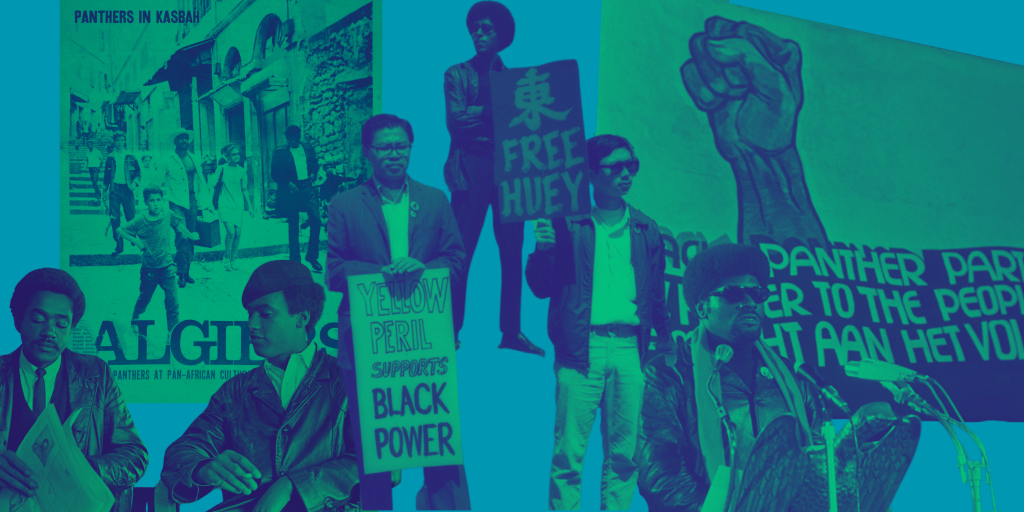
- Ryan Cairns contributes two essays in this section. In the first, she discusses the importance of understanding the Black Panther Party not just within the US but as part of a broader international consciousness. In the second, she historicizes the current divestment movement on college campuses within the context of how students in the past helped end the South African Apartheid.
- Mella Bettag and Shannon Dye take on different aspects of the US Prison-Industrial Complex in their respective pieces, focusing on solitary confinement and prison labor practices.
- Carolina Olivas focuses our attention on Puerto Rico, calling for the public to pay greater attention to the island’s struggle for freedom and equality.
- Finally, Hanna Ho helps us reconsider political campaigning by discussing how Chile’s use of positive campaigning helped provide a vital victory that ended the dictatorship.
Human Rights and Migration
We then turn to pieces which explore the connection between human rights and migration in a global context.
- Elise Yu dives into one kind of migrant labor: the kafala system. Specifically, she looks at how the system functions and undermines the rights of migrant workers in the United Arab Emirates.
- Carolina Olivia examines the complex interplay at the U.S. Southern Border and how it might help us better understand the ongoing influx of asylum seekers, specifically from Venezuela.
- Rachel Kessler makes this issue local by examining how those asylum seekers are being received in Sanctuary Cities, such as Chicago, and what that means for balancing the politics within the US and broader international commitments to human rights.
- Myles Xavier brings the issue of human rights and migration even closer to home by sharing the story of his grandmother, a member of the Windrush generation, and the struggle for justice for that generation in Great Britain.
Human Rights for Whom?
The final set of pieces asks essential questions about who is entitled to human rights.
- Ana Estupinan has two thought-provoking pieces where she troubles some of our central assumptions about who is deserving of human rights. In the first one, she writes about how the morality-based framing of human rights fails to protect the rights of certain marginalized groups, particularly the rights of sex workers. In her second piece, she explores the importance of thinking about human rights more broadly, discussing how we should understand weight stigma as a fundamental threat to human rights.
- Rachel Kessler discusses the ongoing importance of passing the Equal Rights Amendment, exploring how it was drafted and why it has yet to be passed one hundred years later.
- Finally, Elijah Bullie explores the importance of understanding Indigenous Americans’ right to self-determination as linked to environmental activism.
Together, these pieces raise critical questions about the inclusivity and application of human rights, addressing marginalized groups and emphasizing the importance of broadening the scope of human rights discussions.
-
Protected: A Brief History of the Black Panther Party’s Internationalism
There is no excerpt because this is a protected post. Read more
-
Protected: On the Matter of Universality
There is no excerpt because this is a protected post. Read more
-

Protected: The Growth of Chinese Economic Influence
There is no excerpt because this is a protected post. Read more
-

Protected: The Failed Ratification of the “Disability Treaty”
There is no excerpt because this is a protected post. Read more
-

Protected: The Situation in Ukraine is One Thing the United States Should Not Be Blamed For
There is no excerpt because this is a protected post. Read more

 Savitri Maya Kunze