
Since the 17th century, tourism has woven itself into the fabric of global society, becoming an enduring facet of human exploration and connection.1 In the 1960s, this cultural phenomenon experienced a remarkable resurgence, propelled by a combination of increased prosperity, technological advancements, and a growing desire for international exploration.2 Whether in historical or modern destinations, the underlying expectation remains consistent – a haven for relaxation and escape from the pressures of capitalism. This multimedia exhibition delves into the mechanisms employed by the tourism industry to meet these expectations, shedding light on its substantial and often detrimental effects on local communities. Our focus is on revealing the intricate dynamics that lie behind the glossy facade of leisure.
Through a curated selection of images and videos, this exhibition illuminates the substantial and often detrimental impact of tourism on local communities. In particular, we focus on the role consumerism plays in altering the cultures of these hot tourist spots, changing them from native culture to an adapted tourist culture. Despite the prevailing belief that tourism contributes positively to local economies, the reality is that tourist-culture often harms them.1
This is cultural genocide. A violent form of erasure that is slow, meticulous, and especially sinister as it gives off the impression of helping less fortunate economies.2
In the exhibit, we explore high demand tourist economies: the Caribbean (Haiti and Jamaica), Polynesia (Indonesia and Hawaii), Africa (Ethiopia and Egypt), and Asia (China and Vietnam). The multimedia elements that we selected illustrate how tourist economies prioritize tourist engagement over the livelihoods of the people that already live there. The media depict how tourism inherently catalyzes the erosion of native culture, shifting the spotlight from locals to foreigners.
Within this curation, we examine the multifaceted dimensions of cultural genocide, encompassing the displacement of locals, privatization of public resources, disrespect for native culture, and the destruction of infrastructure. This exhibition invites visitors to engage with and reflect upon the profound impact of tourism on these diverse communities through a multimedia lens.
Definition of Cultural Tourism
These types of tourism can be defined as a form of tourism that is centered on the following key concepts (Wood 1984; Richards 2001; Mckercher and du Cros 2002):
Fang, WT. (2020). Cultural Tourism. In: Tourism in Emerging Economies. Springer, Singapore. https://doi.org/10.1007/978-981-15-2463-9_4
- Travel to experience the arts or history of a location or travel to immerse oneself in the language, society, or culture of a region of destinations .
- Movement of people to more specific cultural attractions like heritage sites, artistic, cultural manifestation , arts and drama outside their normal place of resident.
- The movement of persons to cultural attractions away from their normal place of resident with the intension of gathering new information and experience to satisfy their needs pertaining to the cultural features of the host community.
- Visit by persons from outside the host community motivated wholly or in part by interest in the historical, artistic or lifestyle heritage offering of a community religion groups or intuitions.

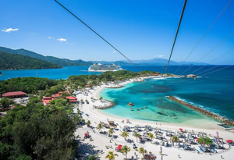
Right: LamadeeTM, Royal Caribbean
Lamadie, Haiti/LamadeeTM, Royal Caribbean
Labadie, Haiti is a small, poor town in northern Haiti. LabadeeTM is the privatized and closed off tourist destination right next to it. Royal Caribbean changed the spelling, trademarked it, and leased the land until 2050. The resort is not open to Haitians – only to Royal Caribbean tourists.
This video was taken in LabadeeTM, evident by the majority white crowd and the Royal Caribbean cruise ship in the back. The only Haitians that have access to this beach and music festival are the ones that work at the resort, or ones who pay Royal Caribbean.
If you love to vacation in the hot sun on a beautiful beach, this is the place for you. Royal Carribean’s Labadee Port is very walkable, with multiple beaches close. There was no shortage of places to lounge in the shade or bars to get a cold drink at. My only complaint was that it was hot, HOT, H-O-T the day we spent at Labadee… which is expected, so grab your suit and sunscreen and hop in that beautiful water.
— Jessica, Local Guide, Google Review
Bob Marley Beach, Jamaica
Norman Stephenson and his father, renowned Rastafari elder Gladstone Stephenson, on Bob Marley Beach. Gladstone has lived on the beach for nearly 50 years. He has paid a land tax since 2008 and never privitized it. Norman is currently suing the company that is planning on bulldozing his family’s land. The company is trying to dispute his ownership so they can build a new resort.
This piece interviews local Jamaicans that are losing access to a beach they’ve used their whole lives – a beach that is one among the last few public beaches on the whole island. While tourism “helps the economy,” it hurts local businesses and prohibits natives from using their country’s land.
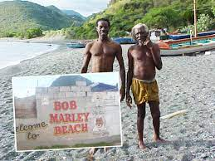
Bob Marley Beach is like finding a secret paradise – super chill vibes and a tight-knit, safe community make it a haven. What’s awesome? No fuss with parking or feeling pressured to buy food, but Kamala’s spot is a hidden treasure for lip-smacking fish, dumplings, and sip.
— Doresa T, Local Guide, Google Review
Xinjang, China
A reporter from ABC News Australia provides the viewer with an inside look at Xinjiang, showing the distinction between the advertised tourist attractions and the cultural genocide of Uyghurs occurring in the city.3
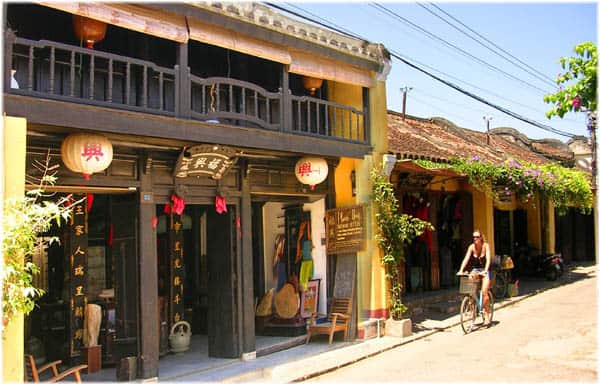
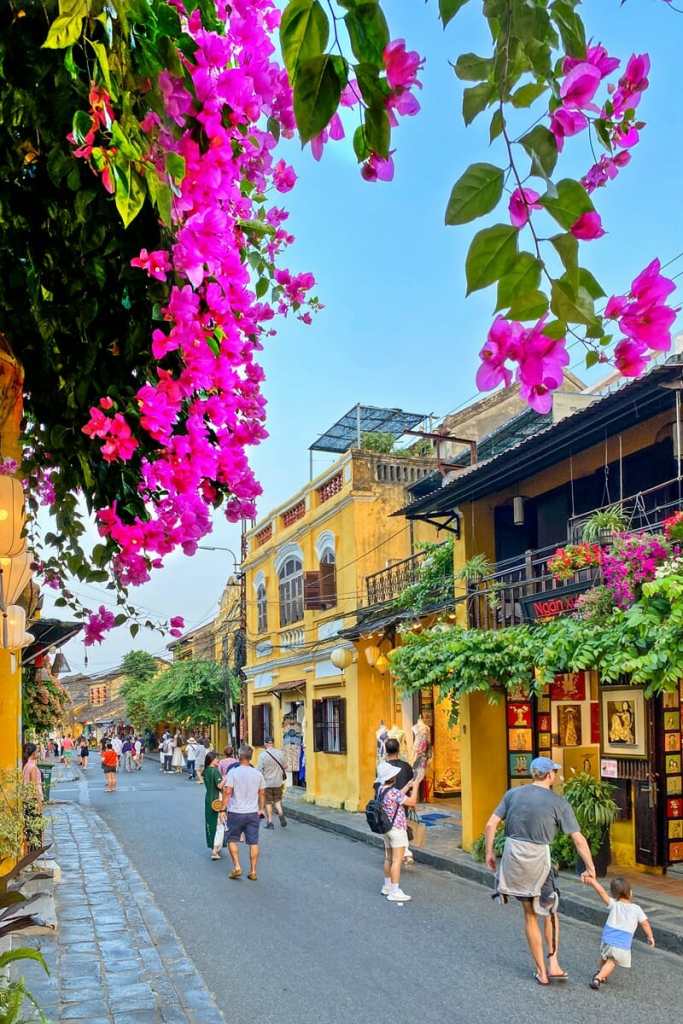
Hoi An, Vietnam
The traditional use of space inside Hoi An houses has radically changed for the sake of tourism. Local government officials and business owners view these changes positively, but tourists view it as museum-like and not representative of the life of Hoi An culture.4
Over hyped place. Dont visit in the afternoon or in the morning. Please visit this place by evening. I have a sip of coffee at cong seeing sunset, then this place turns into something different with latern and lights. It was good to be there but too touristy
— Gaurang Labde, Local Guide, Google Review

Ethiopian Orthodox Tewahdo Church
The Ethiopian Orthodox Tewahdo and monasteries have their own dogmas and norms for anyone who wants to visit them. Among these dogmas and norms is the prohibition of non-believers from entering the church compound. However, most of the tour guides and administrators allow foreign tourists to visit the churches and monasteries in pursuit of money. This picture is used as an advertisement on a travel website.5
“All tour information it was detailed enough and attractively presented. Our guide was fabulous! he knew his stuff, became quickly sensitive to the needs of our group, went out of his way to help us. super. Tukul village in Lalibela was delightful with lovely rooms, friendly helpful staff and a great atmosphere. Thank you, team Tadele Travel!
— Rev. Sally Lynch, Bishop of Reading Pilgrimage – January 2018, UK, Tadele Pilgrimage Website
The Great Pyramid of Giza
This is an instagram post from a tourist showing how the Great Pyramid of Giza is closed to visitors.The Great Pyramid of Giza is the only one of the original Seven Wonders of the World that is still standing. However, Decades of overtourism to Giza have contributed to years of overcrowding from tourists, erosion from footsteps, and even vandalism and theft have brought immense strain on the towering structures.6
One of best sight to behold. Pristine and safe place. Not to mention people are really helpful, altogether depending on your origin country, they might charge you extra. So please be aware of such people.
— Abhishek Dubey, Local Guide, Google Review
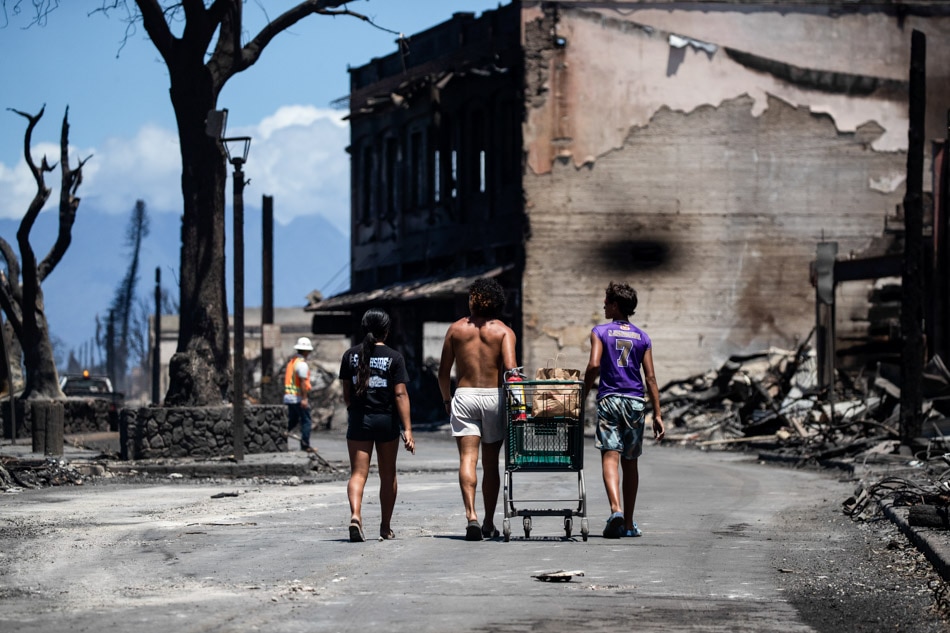

Lahaina, Hawaii
The wildfires that swept Lahaina, Hawaii in August of 2023 destroyed 2,170 acres of land and killed 99 people. Natives begged officials for time to grieve before tourism reopened.
On the top is a picture of Lahaina natives walking among ruins after the wildfire.
On the bottom is a picture of celebrity Paris Hilton and her family at a resort a few miles away from Lahaina, Hawaii only days after the tragic event.
This resort is stunningly beautiful. It has several walking paths where you end up at the beach. The staff there, though , is what makes this resort so magical. During a very difficult time, they were absolutely amazing and pitched in to help those affected by the wildfires in every single way possible. Kindness at its finest.
— Abracadeborah Smith, Local Guide, Google Review
Bali, Indonesia
Eighty-seven percent of Indonesians identify as Muslim and observe cultural practices, such as modest dress. Tourists disrespect Indonesian culture by wearing revealing clothing and posing naked in front of sacred sites. In this video, a nude German woman forces her way into a sacred temple during a traditional dance ceremony in Bali, Indonesia.
Very peaceful beautiful temple with great people and good activities. Awesome place. Love it.
— El Paraiso Star A, Local Guide, Google Review
- See: Netto, Alexandre Panosso. “What is tourism? Definitions, theoretical phases and principles.” Philosophical issues in tourism 37 (2009): 43-62; Gyr, Ueli. “The history of tourism: Structures on the path to modernity.” Notes 2, no. 8 (2010): 1-18; and Amblard, Marion. “Grand Tourism: Educational Journeys in 18th Century Europe.” Books and Ideas (2018). ↩︎
- See: Zuelow, Eric. A history of modern tourism. Bloomsbury Publishing, 2015; and Page, Stephen J., and Joanne Connell. Tourism: A modern synthesis. Routledge, 2020. ↩︎
- “Positive and Negative Impacts of Ethnic Tourism“;
Fang, Wei-Ta. “Cultural Tourism.” In Tourism in Emerging Economies: The Way We Green, Sustainable, and Healthy, edited by Wei-Ta Fang, 75–101. Singapore: Springer, 2020. https://doi.org/10.1007/978-981-15-2463-9_4.
↩︎ - Facing History & Ourselves. “Cultural Genocide,” October 16, 2019. https://www.facinghistory.org/en-ca/resource-library/cultural-genocide; McGill Law Journal. “Cultural Genocide: Legal Label or Mourning Metaphor?” ↩︎
- Kachmar, Oleh. “Uyghur Heritage and the Charge of Cultural Genocide in Xinjiang.” New Lines Institute, September 24, 2020. https://newlinesinstitute.org/rules-based-international-order/genocide/uyghur-heritage-and-the-charge-of-cultural-genocide-in-xinjiang/, “Radio Free Asia.”
↩︎ - UNESCO, “The effects of tourism on culture and the environment in Asia and the Pacific: cultural tourism and heritage management in the world heritage site of the Ancient Town of Hoi An, Viet Nam” 2008. ↩︎
- See: Gubaye Assaye Alamineh, Jeylan Wolyie Hussein, Yalew Endaweke Mulu & Bamlaku Taddesse. “The negative cultural impact of tourism and its implication on sustainable development in Amhara Regional State,” Cogent Arts & Humanities, 10:1 (2023). ↩︎
- Nashwa Talaat; Soha Bahgat Farag, “The Impact of Tourism on The Cultural Identity at The Age of Globalization Egyptian Perspective,”
Journal of Association of Arab Universities for Tourism and Hospitality
Mustafa, Mairna, “Cultural Heritage: A Tourism Product of Egypt under Risk” Journal of Environmental Management and Tourism 12.1(49).21 ↩︎
 Savitri Maya Kunze